Showing posts with label books. Show all posts

Tuesday, September 15, 2026

Re-readable Scenes

A friend who has started writing wonderful novels mentioned that he’s looking for great scenes, scenes that are wonderfully well-written even if you aren’t necessarily reading the rest of the book.

So here are five scenes I remember rereading immediately, and in each case have reread a few times since.

Neal Stephenson, Snow Crash. You know this one already, right? The opening pages about the Deliverator and the deadline-challenged pizza delivery that gets it all rolling? Hard to improve on this opening, and it’s beloved by friends of mine who don’t normally care about science fiction. (As an aside, man there have been a lot of interesting covers for this book.)

Ian McEwan; Enduring Love. The opening scene is an astonishing balloon crash. I can’t speak for the rest of the book because as soon as McEwan’s books continue past their set pieces, I tend to get more and more irritated and stop. If I grow out of that, his prose will be the reason. But you won’t go wrong with this opening.

Guy Gavriel Kay; Under Heaven. The opening chapter details the protagonist’s period of mourning for his dead father. He spends two and a half years on a remote battlefield where his father had commanded, burying a fraction of the tens of thousands of skeletons left over from the battle, sheltered each night in a cabin among the weeping and screaming ghosts, and sometimes realizing that a voice he has gotten used to hearing has gone silent, meaning he has put their bones to rest. (Yes the book is also great.)

Naomi Novik; Uprooted. The wizards’ astonishing tower-defense against the army of the Queen.

Ian Banks; The Hydrogen Sonata. The scene in which a Culture ship lectures a rival ship about the dangers of playing soldiers. It’s a perfect bully-shutdown, and the moment when a character who happens to be a ship reveals to their rival, and the reader, what they truly think.

Monday, November 3, 2025

City of Bones: a Wonderful Martha Wells Novel

The success of Martha Wells Murderbot stories has reopened the window for well-supported publication for some of her earlier books!

One of my favorites of her earlier stories is City of Bones. Wells has a different (excellent) book that uses the word necromancer in the title, but City of Bones isn’t part of that series and it’s not about undead. It’s about post-fall archeology, marginalized heroes who scrape by, and forerunner tech that may as well be magic.

I haven’t read the newly revised edition yet. The original version started slowly but right about the spot I wondered if I would keep reading it blossomed into something special, so if you’re a reader like me who sometimes just quits, don’t.

One thing I loved about City of Bones was its evocation of place. I felt I’d been there, in its dry high desert and multi-tiered city, and for a couple years after reading it, while traveling, I would get flashes of thinking “Hey, this place reminds me of City of Bones.” If there’s a good word for this type of memory impression from a place you’ve never been, in whatever language, I’d like to hear it.

Sunday, October 30, 2022

Re-remembering the Dragon Empire

My work rhythm for this week has been to work on game design for an hour, then read ten minutes. So I'm always going to associate this final week of preparing the first playtest packet of 13th Age 2E with Arkady Martine's A Memory Called Empire. What a great book. The author is a scholar of the Byzantine Empire. Sometimes when scholars write novels their learning sucks up the oxygen. In Martine's case, she's using what she knows to enhance excellent storytelling.

Meanwhile in our not-really-Byzantine Dragon Empire, we're going to have the first 2E playtest packet out in the first few days of November. Four chapters of the packet are done. The classes chapter still has math underway, along with some epic-tier powers and a bunch of feat-checking.

I believe we've got a couple of days work left on the playtest manuscript, followed by a day making last minute additions to the playtest list, writing the playtest questionnaires, and wrangling the distribution. Either of those timelines might or might not add a day, so I'm aiming at having the 2e playtest packet out on November 4th.

Tuesday, March 8, 2022

The Wave & Wave

Yeah, it’s two great books with almost the same title.

The Wave: In Pursuit of the Rogues, Freaks, and Giants of the Ocean, by Susan Casey, is from the genre that mixes compelling science with the author’s personal experiences. The science concerns the physics of giant waves and interviews with the people who study them, along with an investigation of previous understandings of giant waves, and how we are still underestimating the frequency and effect of rogue waves of 80’ or more. The science chapters are fascinating.

The personal-experience chapters eventually focus on time spent with champion surfer, inventor, and adventurer Laird Hamilton. The adventures on the waves are the closest I’ve come to reading a true-life Doc Savage story. If Hamilton isn’t bigger than life, we’re given an excellent picture of just how big life can be. For a more detailed review, this one is good.

Wave, by Sonali Deraniyagala, has an entirely different purpose and emotional register. It's not how big life can be, it's how big a disaster can be and how that hits one person. The cover design matches the book’s impact.

The first chapters are a mind-wrenching account of being caught in the 2004 tsunami in Indonesia. It’s unlike anything else I’ve read. The rest of the book follows a tortured path through survivor’s guilt and the mechanisms of a return to life. The copy I read didn't have a subtitle, but now it's subtitled "A Memoir of Life after the Tsunami."

I found myself reading a number of disaster stories during the pandemic. A disaster this huge, that hit a world away from almost everyone I know, is one of those things I try to remember as part of maintaining perspective. I associated Wave with another book I loved, Annie Dillard's For the Time Being. Dillard's book I can reread, Deraniyagala's, probably not.

Tuesday, March 9, 2021

2nd Book First: The Two Towers

the original tome, battered but intact

As a kid, I read what I could find. Thanks to the vagaries of bookstores and the limitations of libraries, there were at least four great fantasy series that I entered via the second floor, book number two, sometimes without even knowing I'd missed the actual entrance.

Yes, this is a story about olden days. 

The Lord of the Rings was my first missed doorway. My mother had the full unlicensed Ace trilogy. She wouldn't let me read it when I was in second grade, living in Heidelberg Germany, but that probably wouldn't have stopped me for long, except that our teen babysitter smoked cigarettes in our apartment and borrowed The Fellowship of the Ring. Cigarettes? Forgiven.  The Fellowship? Gone with a moving van when the girl's family got shipped off-base a couple months later.

Mom refused to buy a new copy of the book. I suspect that her arguments--the former babysitter's ongoing obligation to return the copy, and money--were screens for the fact that she just didn't want me reading Tolkien as a second or third grader. But it's also possible that we couldn't find a copy. We were in Germany, the Ace books were being outed as unapproved, and we certainly never shopped anywhere that had them for sale. About a year later Mom tried to get me to read The Hobbit, but that wasn't gonna happen, that book was for kids. Said me. 

So in fourth grade, still in Germany, I read The Two Towers. For me, the Lord of the Rings didn't start with Bilbo's 100th birthday party, hooded riders in the Shire, and hapless hobbits having to be rescued from trees and barrow wights. It started with three kickass warriors--an elf, a dwarf, and a ranger--chasing orcs across an endless plain. The orcs' hobbit victims felt less hapless, given that they (spoiler alert) eventually figured out how to cut themselves loose and run away. Riders of Rohan? Keeping score at Helm's Deep! Onward! There are people who dislike The Two Towers because it's a sequence of military encounters and landscapes, punctuated by ents. For me, growing up on Army bases, trying to figure out ways to play with my Airfix Roman and barbarian armies, a book of fantasy military encounters was exactly what I was looking for. I reread The Two Towers as soon as I finished the first pass, since the Frodo stuff at the start of Return of the King made me aware I didn't actually understand what was going on. 

We returned to the USA before I entered fifth grade. Our first week back, Mom went shopping at a big American bookstore and returned with a present: Ballantine's The Fellowship of the Ring. She cared that it was an authorized edition. The picture of the author on the back revealed that Tolkien smoked a pipe like my dad. We were home.

Friday, March 27, 2020

How Things End: Two Rereadables

I don't reread books often. When I do, there's something special going on. Here are two books I've reread and will soon reread again.

For the Time Being by [Dillard, Annie]
For the Time Being, by Annie Dillard
Earlier in life, I was so inspired by passages in Dillard's Pilgrim at Tinker Creek that I started seriously attempting to write. One of my college-professors slammed me for giving her "belle-lettristic" essays and after she explained the meaning of the term I had to admit that writing pretty letters sounded like a plan.

For the Time Being is the philosophy of being and mortality by a writer capable of beautiful letters who can also strip subjects down to startling fundamentals. The metaphors for the differences between single tragic deaths and mass catastrophes will stick with you forever. I reread the book after the Japanese tsunamis and I suspect I'll look at it again soon. Not my original copy: that I left on a plane after I'd started writing poetry in it, so someone out there has a copy that's plus/minus my interstitial poems.

The summary of For the Time Being on Amazon is excellent, and will tell you if you're interested if my words have not.

The Hydrogen Sonata (A Culture Novel Book 9) by [Banks, Iain M.]
The Hydrogen Sonata, by Iain M. Banks
Banks' last Culture book is about a civilization figuring out how and if it's going to transcend. It's also about a musician and the instrument she carries that's devoted to attempts to perform a single impossible piece. I've had other Banks fans tell me they didn't like this book that much, but I love it, and some of its observations are right up there with Dillard, not to be forgotten.

If you can order from your local bookstore, do it.

And if you read on Kindle, The Hydrogen Sonata is on sale today as a Kindle deal.

Tuesday, March 17, 2020

Guest Post: Tweet's Projects

Since Jonathan Tweet is temporarily between blogs, he occasionally posts on game design here. He's something of a minimalist so I added italics and boldface.

Jonathan says. . . .

Here’s a list of my current projects, from a game that’s done and in the publisher’s hands to games that are just in the beginning stages of design. I always have several projects “live” at a time, although sometimes a single project takes over most of my schedule. Over the next months and years, here’s what you might see from me. 

Design complete: A science-oriented kids’ game with a new publisher. 

Largely complete: Sourcebook for a new publisher, offering a new take on a well-loved setting. 

Design underway: A new edition of Everway, where I can apply what the free-form roleplaying game design community has learned and invented over the last 25 years. Working with the Everway Company, comprising people I’ve known since Everway’s debut. 

Underway: Monthly 1,000-word essays about my history in RPG design, posted on EN World. 

Underway: Sourcebook for another new publisher, also offering a new take on a well-loved setting.  

Underway: In the tradition of Grandmother Fish, another lovable picture book that teaches evolution science to pre-schoolers. 

Maintenance: Every year, I update the content of the game-design course I teach each fall through the University of Washington. 

Beginning stages: Head-to-head card game. Latest brain storm. 

Beginning stages: A story-oriented supplement for 5E with a new publisher. 

Beginning stages: Possible relaunch of a quirky trading card game from the 90s. 

Back-burnered: Non-fiction book, Jesus for atheists. 

Tuesday, October 31, 2017

Dream-Quest, Dreamlands cards


Here’s why I love Kij Johnson’s The Dream-Quest of Vellit Boe:
a)     Kij Johnson is one of my favorite writers, and the fact that I haven’t read all her books yet is a symptom of deliberately rationing her work over time—next up: Fudoki.
b)     The Dreamlands are my favorite part of Lovecraft’s mythos.
c)      Vellit Boe’s dreamquest works as mythos journey, perspective-shift social commentary, and a trip into the lives of real people in a surreal world.
d)    Brutal mid-paragraph shifts from normality to deadly violence. They remind me of the non-transitions in the movie version of No Country for Old Men. This is how violence slams into real life, not with musical cues.

Here’s why I love Heather Hudson’s Dreamlands Christmas Cards that are on Kickstarter for the next couple days, and can be found here:
a)     Hilarious use of the mythos' brightest corners.
b)    Cards that translate both in and out of fandom.
c)     Homage to Calvin & Hobbes. 
d)     At least one card that requires a scenario: (Santa Claus vs.) The Black Galley!


Tuesday, February 28, 2017

Wearing the Cape: the book & the Kickstarter


My favorite superhero novels are in the Wearing the Cape series by Marion G. Harmon. The series is humane, well-written, and one of the rare superhero treatments of time travel and its consequences that builds (and foreshadows) an interesting story instead of stumbling over itself. The plots are worthwhile, the characterization is excellent, and though I sometimes disagree with the author's politics and politically-informed worldbuilding, those spots make for interesting thinking.

Harmon has always talked about his interest in roleplaying, and he's now in the last four days of a successful Kickstarter bringing his Wearing the Cape world to the FATE system. So far I haven't been a FATE player. I'm finally going to give the system a serious spin via Wearing the Cape.

One of my favorite things about the Wearing the Cape books is how well their fight scenes express the personalities of the characters. Jeff Grubb wrote about this in the Kobold Press book, The Kobold Guide to Combat. Jeff's essay is called "Why we Fight: Combat as Communication." When I read Jeff's essay, the first thing I thought of were the three books of the WtC series that had been released at that point. I'm happy to say that later books in the series have lived up to the early books' promise on this score. I suspect the RPG system can handle this well, so I'm looking forward to the release of the rulebook, which should happen via PDF a week or two after the Kickstarter ends. Yeah, this rulebook is finished.

Even if you're not interested in the Kickstarter, look for the Wearing the Cape books for great examples of combat scenes that communicate who the characters are, and why we should care.

Wednesday, November 30, 2016

Dragonmeet & other Meetings

I'm in London for Dragonmeet alongside the Pelgrane crew!

Last year on the train into London from Heathrow, before Dragonmeet, I was reading Lavie Tidhar's The Violent Century, glancing out of the train at delapidated warehouses as the novel's superbeings negotiated the London fog.

Saturday afternoon at last year's Dragonmeet, the man wanting to talk about roleplaying games over the table at the Pelgrane booth turned out to be Lavie Tidhar! He said that RPGs weren't something he had really tried, though the friend beside him seemed to be more familiar with the genre. I gave Lavie a copy of 13th Age, and when Ken Hite came back to the booth Ken got him a copy of The Dracula Dossier.

This year, on the train ride into London, I was reading Catherynne M. Valente's Six-Gun Snow White, a beautiful strange little book. I'm pretty sure there's no chance of seeing Catherynne M. Valente at this convention, but perhaps something similarly magical will reveal itself.

Looking forward to seeing friends from this Eastern side of the pond in a few days.


Tuesday, June 28, 2016

My Book of the Year: The Sorcerer of the Wildeeps


I've gasped out loud while reading one book.
This book.
Twice.

I don't want to say too much about the story. Surprises exist. I'd rather not hint.

It's a blend of the brutal and the mythic and the humane, glowing in unforgettable language that's often worth reading aloud.

On e-readers the novella is cheap. $3 cheap. I'm buying a paper copy for my shelf of favorite books and to pass around to friends.

Thank you, Kai Ashante Wilson.

Wednesday, May 13, 2015

Osprey's New Wings

This isn't a blog with new news. It's an appreciation.

A few years ago Osprey Publishing started publishing miniatures wargames in book form. This probably shouldn't have been a huge surprise, since Osprey's military history line has long been a huge resource for miniatures painters and historical wargame designers. So far my two favorites in the Osprey wargame line are Lion Rampant--Medieval Wargame Rules, by Daniel Mersey, and Andrea Sfiligoi's A Fistful of Kung Fu--Hong Kong Movie Wargame Rules.

The wargame line has notably moved away from the straight historical treatments that Osprey made its name with. Andrea's book, for example, is a skirmish wargame treatment of the territory Feng Shui arranges for roleplaying games. And with the launch of the Osprey Adventures line in 2010, Osprey has a full-fledged documentary fantasy project going, with books on everything from Hercules to Zombies to Werewolves and Ken Hite's The Nazi Occult.

The catalog of about-to-be-published Osprey books is a bit like walking into the history section at the bookstore and finding yourself at a gaming convention. Chris Pramas is about to publish Orc Warfare! Phil Masters is coming out with The Wars of Atlantis. Ken is putting together The Cthulhu Wars.

In a week, two friends have Osprey books coming out that I've already pre-ordered. Ryan Miller has a naval wargame, Fighting Sail: Fleet Actions 1775-1815. And Steve Long is publishing Odin: The Viking Allfather. The artist for Odin, a Spanish woman named a-RuMor, does great stuff, and I'm keen to see Steve's treatment of Odin-through-history and Odin-in-myth.


Wednesday, February 25, 2015

Monk & Frogfolk Today, GottaCon in Victoria Friday

Greg Stolze’s TheForgotten Monk 13th Age novel is wrapping up its Kickstarter in a few hours. Jonathan Tweet and I are on deck to write short stories using Greg’s characters and the novel is huge fun for fantasy readers, martial arts fans, and readers who like truly smooth and infuriating villains.

For a different type of villain, check out Temples of the Frogfolk, the second issue of the 13th Age Monthly, out today to subscribers! Author Gareth Ryder-Hanrahan is also on board to write a short story for The Forgotten Monk. Sign on to the Monthly now and you’ll also get caught up with last month’s installment, Dragon Riding.

A couple days from now, Friday the 27th, Jonathan Tweet and I are among the guests who will be running and talking about games at GottaCon in Victoria. I’m running 13th Age in Glorantha Friday night, Shadowrun: Crossfire Saturday afternoon, and also helping with a Saturday workshop on Crafting Hooks (along with Ryan Macklin and Rodney Thompson, to name the workshoppers I already know) and a Sunday workshop on running Kickstarters. 

Monday, February 16, 2015

Where dragon riders came from

 [art by Rich Longmore]
Dragon Riding is the first issue of the 13th Age Monthly subscription that started a couple weeks ago. You can pick up a subscription tothe 13th Age Monthly for the yearly price of $24.95. When you subscribe, you’ll get all the 4000+ word issues you missed so far in the year.
The Monthly’s second installment, Temples of the Frogfolk, will be published toward the end of this month. I’ll say more about the hopping-froggies soon, but for now I'm talking about how Dragon Riding made it into 13th Age. The biggest influences were Anne McCaffrey, Morno, Wade Rockett, and ASH LAW.
Anne McCaffrey because I discovered both D&D and her dragon riders of Pern the same year—1974—while living in Fort Leavenworth, Kansas. Somehow I got hold of the second of her dragon riders books, Dragonquest, instead of the first. I read it enough times that I had no choice but to include a school for dragons in the first dungeon that I drew on graph paper.
(Confession: the school for dragons was a big blank area in the graph. I had no real idea what the school for dragons was going to be like. It may not have just been luck that my 5th grade brain was never forced to figure it out, because I put the school behind the room that was modeled after the Watcher at the Gates from Tolkien’s Moria. Nobody ever made it past that room. Huh.)
Push forward many years and McCaffrey’s Pern books have had a great deal of influence on fantasy, maybe more than people know. McCaffrey’s depiction of newly hatched dragons impressing on humans to whom they bond as life mates has been used everywhere from Elfquest (elves and wolves) to the Temeraire Napoleonic dragon series by Novik. Maybe I’m wrong about McCaffrey creating that impression, maybe it was already in the wind somewhere, but I think she’s the person responsible.
At one point these 13th Age dragon riding mechanics had a bit of talk about bonding rituals and such-like magical impressionism. But handling it in any detail felt like a story angle that GMs and players should invent for themselves in a personally satisfying way if they’re into that type of thing, and in the end I took it out of the rules.
Morno gets credit because his illustration of dragon riding sold me an aerial dragon combat game once upon a time. As in, I saw Dragonlord, and I bought it. And then I really wanted to play it. I held on to it for years, tinkering with ways to make the game playable. Or perhaps the word would be “fully, enjoyably playable.” I think I still own Dragonlord somewhere in a forgotten game box, but it’s not like it is going to be any more playable now; so it was time to invent a system for dragon riding combat that would work.
Wade Rockett forced my hand by seizing on dragon riding as something cool that was happening in the Dragon Empire and not letting me forget it. I chirped, “Yes, sure!” to Wade’s suggestion of handling the topic in 13 True Ways. So when 13 True Ways grew wild and overpopulated, it was clear that dragon riding was going to have to come later. It’s even somewhat true that creating a dragon riding article pushed us farther on the path toward having a 13th Age Monthly. There’s room for smallchunks of constant fun, and there was a need for a few small pieces on topics that, in hindsight, we should have covered in 13 True Ways.
ASH LAW gets credit as co-author of the piece because when I turned away from the topic, pleading that I had other design tasks to handle, ASH kept designing dragon riding systems, each better than the last. ASH wasn’t going to let it go. He wants to write a 13th Age sourcebook on mounted combat and he was going to push the system through even if I was stuck in the mud of no-that-won’t-work.
So eventually I stopped being a stick-in-the-mud and designed a system we could be happy with. This Dragon Riding piece is going to serve as the basis for how other mounted combat works in the game. It also has notes on how to apply the mechanics to different types of campaigns and notes on how to run and balance battles for PCs who are on dragonback.

And it gives me a good reason to dig through old game boxes, because the counters and maps from the Morno Dragonlord game will be perfect for the sessions I run as dragon riding adventures! 

Thursday, January 29, 2015

Monk & Thief

There are two great new 13th Age books in different stages of imminence this week.

Kick!
Greg Stolze’s TheForgotten Monk is the first 13th Age novel! It’s on Kickstarter to be published by Pelgrane’s Stone Skin Press imprint and it has already made its initial target. Now Greg is strettttching and he has been very generous with his early stretch goals, so if you’re a 13th Age player, you can sign on now and you’ll already be receiving stats for monsters and situations from the novel.  

Just as each 13th Age campaign has its own unique plots and interpretations of icons, races, and places, Greg’s novel presents its own reasonable and idiosyncratic interpretations of subjects like elven speech patterns and Imperial law. Unlike fantasy novels connected to some other game worlds, these tropes aren’t part of a canon that other writers now have to use. Each 13th Age novel gets to make its own decisions about the version of the world it’s going to portray.

I love The Forgotten Monk! It’s simultaneously warm and humane and full of lethal violence. That would be a good recipe for a 13th Age campaign and it’s a wonderful mix for a novel. I’m not being descriptive of the contents because you should go look at the Kickstarter page and read about it there. 

13a_stcover_oct2_v2

In Gar Land, Dungeon Hunt You
The second book is just about to hit retail shelves, and you can already pre-order it from the Pelgrane store. It’s Gareth Ryder-Hanrahan’s Eyes of the Stone Thief.

A couple words you won’t have heard already about the book: I’m jealous!

Living dungeons are one of my favorite parts of 13th Age and when Gareth pitched the idea of a living dungeon that hunts PCs and their loved ones down instead of waiting to be looted, I not only knew it was going to be special, I also had a strange creator half-remorse feeling that went something like: “That is such the perfect implementation of the idea and now I am never going to come up with it myself.”

Gar started by calling the project Moby Dungeon. It had stronger-Ahab tones early on before it became so seriously its own thing. You can catch an echo of that original starting point from the peg-legged halfling magician on the cover, gathering power as her comrade hefts a harpoon.

All Gar’s ideas were so good that it wasn’t a surprise when the project kept growing and growing and turned into a 360 page book. Calling it a mega-dungeon does it a bit of a disservice. Mega-dungeon is a nice marketing term, I think, but it implies nothing but a claustrophobic delve-and-more-delve underworld experience. Eyes of the Stone Thief takes the time to detail the surface locations that are connected to killing or supporting the dungeon, the cults and warlords who have a stake in the living dungeon’s fate.

The book is one of the most lootable supplements ever (and I’m talking to you, GMs). It’s got quick-and-dirty mass combat rules as part of a slave revolt in an enemy keep. The Cult of the Devourer. Dozens of montsers useful in all piece of the champion tier, things like the swordapus, filth hydras, and a drunken wizard. Glorious 3D maps of each dungeon level which are pure-caffeine for my imagination, even if I’m not using the Stone Thief I’m going to use those locations! And each of those levels could be the basis of its own dungeon. In fact, Gar has already written an article on the Pelgrane web site about how to chop the 13 levels of the dungeon into 13 separate dungeons. 

So Gareth has done something special. I may have started jealous, but now I’m grateful. This is a campaign fun-box brimming with awesomeness. I don’t know that I would ever personally be capable of writing a 360 page adventure. And now that Gareth has written Eyes of the Stone Thief, I know that I absolutely never have to.

Thanks Gar!


Monday, November 3, 2014

Six Kobolds walk into a bookstore. . . .


Kobold Guide to Combat (Print Preorder) - Click Image to Close

I'm used to getting together with friends for gaming on Wednesday night. But this Wednesday is different, with a different set of friends, and we'll be on a panel at a bookstore talking about games instead of playing.

Kobold Press is publishing the Kobold Guide to Combat. Editor Janna Silverstein has brought together a few of us Seattle-area contributors for a panel/reading/minotaurshit session (if you have to ask, that's triple the experience point value of a bullshit session) at the University Bookstore at 7 p.m. That's the main UW bookstore at 4236 University Way NE and of course it's a free event. (Some early reports showed the event at 6 p.m. Ignore that disinformation campaign by jealous hobgoblins. 7 p.m. is the hour.)

The panel will be huge fun. With Chris Pramas and Jeff Grubb and Steve Winter and Wolf Baur and novelist John A. Pitts, Janna is going to have her wrangling-facilitator hands full.

Come by to say hello, roll a couple dice (I'll bring them!), buy a copy of the new book, and acquire autographs for handwriting analysis.

Monday, July 14, 2014

Authors leveling up


I read two good books in the last couple weeks, both by authors who started their careers along different tracks.


ARI: Let's say that Ari Marmell started out writing D&D sourcebooks. That's probably almost true, at least in a publishing sense.

Ari has been writing novels for a few years now. If you read one of his early books, but nothing since then, I'm happy to say that Ari has gained several levels as a writer. I say this as someone who set aside one of his earliest novels after being jarred out of the story by problematic sentences. But that's no longer a problem. Sentence by sentence, Hot Lead, Cold Iron is smoothly written and great fun. The urban fantasy twist into the world of faeries worked for me, the plot stayed interesting, and I'm looking forward to the sequel.

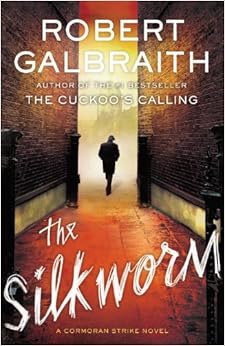
"ROBERT": You knew that Robert Galbraith is a pseudonym for JK Rowling right? Word got out. The Silkworm is a sequel to The Cuckoo's Calling. I eventually liked the Harry Potter books, though I still haven't gotten around to reading the later books in that series. I'm extremely happy that Rowling has moved on to writing adult mysteries. I understand why she wanted to pursue this new direction writing under a pseudonym. This work is excellent and deserves wider readership so I suppose it's not such a horrible thing that the secret leaked.

I liked The Silkworm more than the first book in the series, in part because of its handle on the psychology of the main characters and its accurate assessments of how the same events are different for women and men. That character development started in the first story, and in any case it's well worth reading The Cuckoo's Calling first.

Monday, July 7, 2014

Tweet's Beginner RPG

Part of my job as Jonathan's friend is to make sure his good jokes don't get wasted.

Talking about his Grandmother Fish book the other day, Jonathan said, "Y'know, I could say that this is my most accessible beginner roleplaying game yet! But I'm not going to say that. Only to friends."

At which point I step in.

If you visit the Grandmother Fish Kickstarter page and download a preliminary draft of this child's-first-book-of-evolution, you'll see that describing the book as a beginner roleplaying game is amusingly true. Kids play animals that squeak and wiggle and chomp!

RPG-talk isn't precisely on target for a Kickstarter page that's primarily aimed at science enthusiasts, parents, and humanists. But for this blog that handles games more often than not? Yeah, I'll happily spread the joke that Jonathan was a notch too tight-laced to use.

And if you like what you read and decide to sponsor the Kickstarter, please use your pledge to support our triceratops allies against the fanged aggression of T-Rex!

Please click to download a preliminary draft PDF copy of the book (approx 4 MB)

Monday, April 7, 2014

Rock Paper Reamde


Rock Paper Tiger is a novel about China, people with connections in the intelligence world, electronic gaming, and an American woman trying to survive despite the power struggles of larger forces moving around her. Also art.

Reamde is a novel partly set in China, people with connections in the intelligence world, people with even stronger connections with digital gaming, and at least in part about a woman fighting to survive while being used as a pawn in a terrorist plot.  Also guns. 

I love both these books. Lisa Brackmann's Rock Paper Tiger may be psychologically more true. Its heroine and the people who surround her generally can't fight their way out of screwed situations, they live and die in the fog of sudden events and if they survive they do so in part because of bonds and confidences they only partly understand. I found it funny, moving, and memorable. 

Neal Stephenson's Reamde is a romp. Or several romps run together, playing out in a world in which the protagonists created the next big game phenomenon after World of Warcraft but that isn't necessarily going to keep them alive when terrorists are the ones doing the questing. Despite rounding itself out as a near-perfect comedy, it left me with a lingering mistrust of large RVs with Canadian plates. 

Rock Paper Tiger is the yin to Reamde's yang. Read both. 

Wednesday, January 29, 2014

customer identification

A couple days before Dragonmeet in December, I enjoyed a ramble around the British Museum. I didn't have much time but I still found myself in the wonderful little museum bookstore that's off to the side of the exhibits, down a corridor long enough to give the impression that there must be interesting things happening on either side of the walls.

The only other people in the shop were two attractive young women wearing blazers that were associated with the museum somehow and a sharply dressed twenty-something guy working behind the counter. He had an Italian accent and as I rummaged through Osprey books and read the first few pages of a Norse history called The Hammer and the Cross, he told the two women the story of the coolest thing that had happened to him in the store recently.

A distinguished older man with a beard had spent a good deal of time looking through the books. He'd brought his purchases forward, then paid with a credit card that read UMBERTO ECO.

The bookstore clerk found himself blurting "Are you Umberto Eco?"

"Only metaphorically," he said, leaving no doubt.